Pick up a well-made knife or a fine cue, and the wood tells you something before you even use it: its weight, its temperature, the way the grain catches the light.
Makers have been choosing between the same handful of woods for generations, and each of them earned its place for a reason. In this article we compare four of the most common: walnut, maple, ebony and our own favourite, curly birch. Where they grow, what history they carry, how they behave in the workshop and what makes each one stand out.
We’ll be fair to all four. They are all excellent woods. They are simply excellent in different ways.
Four woods, side by side
Where they grow, how heavy they are, and how hard their surface is (Janka hardness).
Density: average dried weight. Figures from The Wood Database and Wikipedia; curly birch density from our own stock (natural dry; stabilised 1,200–1,300 kg/m³).
A quick note on the numbers
For each wood we mention two figures. Density tells you how heavy the wood is for its size. Janka hardness measures how much force it takes to press a small steel ball into the surface, so a higher number means a surface that resists dents better. Both are averages: every tree, and every board, is a little different.
Walnut: the warm classic
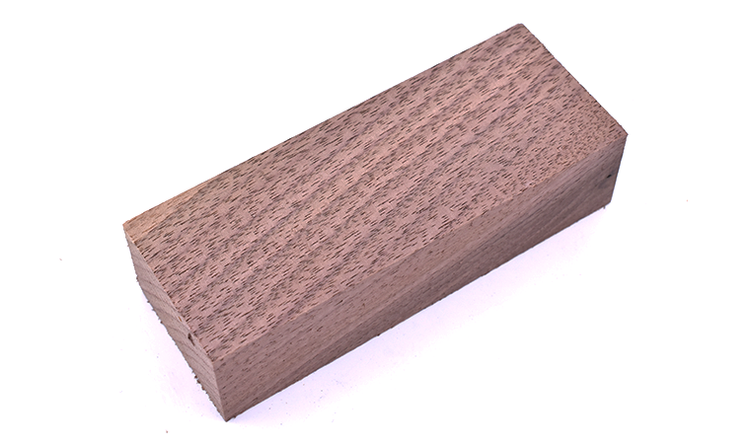
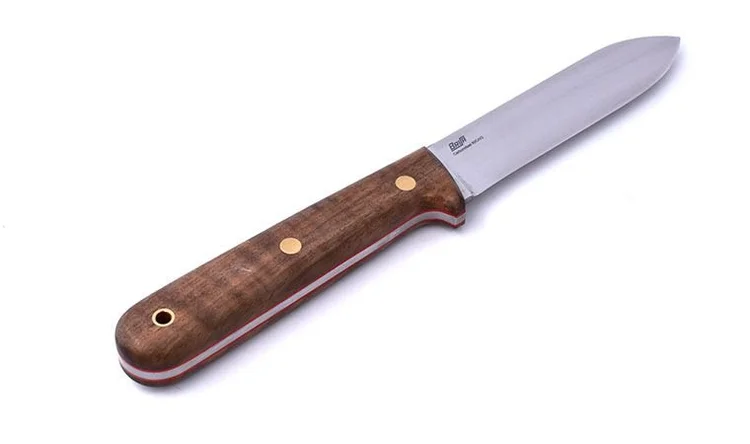
Where it grows
Common walnut (Juglans regia), also known as European or English walnut, grows from southeast Europe to Central Asia. It has been cultivated for so long that its natural range is hard to draw with confidence; Iran and Central Asia are thought to be its original home. Its American cousin, black walnut (Juglans nigra), comes from the eastern United States.
A little history
Ancient Greek writers called it the “Persian nut”, and the Romans planted it across their empire. Its name tells you how highly it was regarded: Juglans comes from the Latin for “Jupiter’s nut”, and regia means “royal”. In North America, black walnut was so sought after for furniture and gunstocks that it became scarce in New England early on, and during the First World War it was even used to make aircraft propellers.
Qualities
European walnut averages around 640 kg/m³, with a Janka hardness of about 5,400 N. Black walnut is a little softer, at around 4,500 N. The wood is open-grained, a rich chocolate brown when dry, and has a soft shimmer when light moves across it. It works easily, glues and finishes well, and stays stable once seasoned.
How it stands out
Walnut’s great strength is balance. It is strong and shock-resistant enough for gunstocks, handsome enough for fine furniture, and friendly enough to work that makers keep coming back to it. On a knife it feels warm and familiar. On a cue it brings a calm, classic look.
Maple: the backbone of the cue
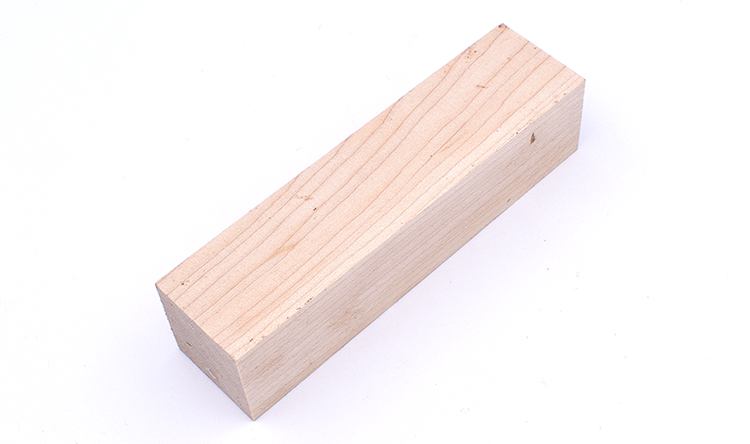
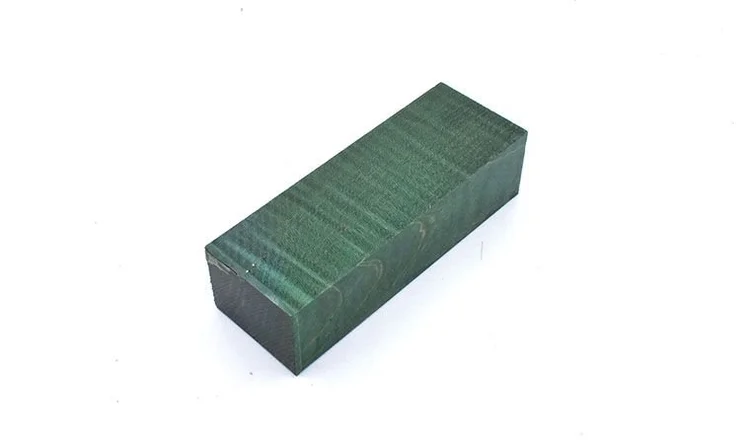
Where it grows
Hard maple, also called sugar maple or rock maple (Acer saccharum), grows in the forests of eastern North America. It is the same tree that gives us maple syrup.
A little history
Hard maple has spent generations doing demanding work quietly: dance floors, bowling alleys, piano frames, croquet mallets and billiard cues. Curly maple, with its “tiger stripes”, is a classic choice for violin backs. If you play pool, you have almost certainly held it: pool cue shafts are almost always hard rock maple. Snooker is the exception, where cues traditionally use ash.
Qualities
At around 700 kg/m³ and about 6,400 N, hard maple is dense, stiff and remarkably even. The wood is pale cream, with a fine, tight grain that sands to a smooth, silky finish.
Then there is bird’s-eye maple, scattered with small “eyes”. It isn’t a separate species but a figure that appears in some trees, and its cause is still debated. In spirit it is curly birch’s closest relative: a familiar tree that, now and then, grows something extraordinary.
How it stands out
Consistency. A cue shaft has to play the same way shot after shot, and plain hard maple delivers that better than almost anything else. Figured maple then adds the decoration.
Ebony: the deep black
Where it grows
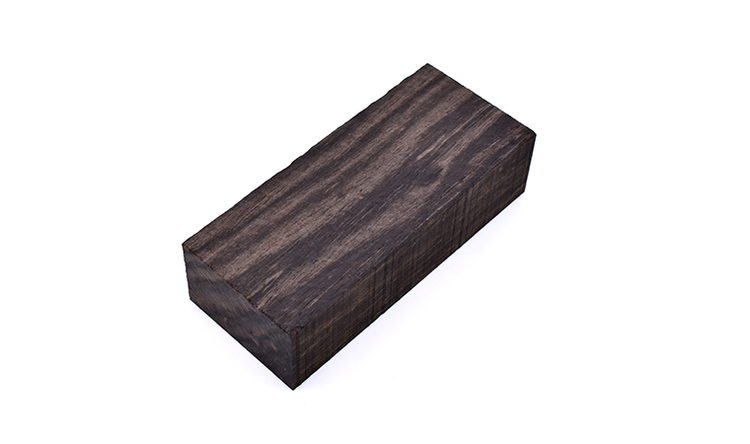
Gaboon ebony (Diospyros crassiflora) grows in the lowland rainforests of west-central Africa, from Nigeria and Cameroon to Gabon and the Congo basin. It is believed to produce the blackest wood of all the ebonies.
A little history
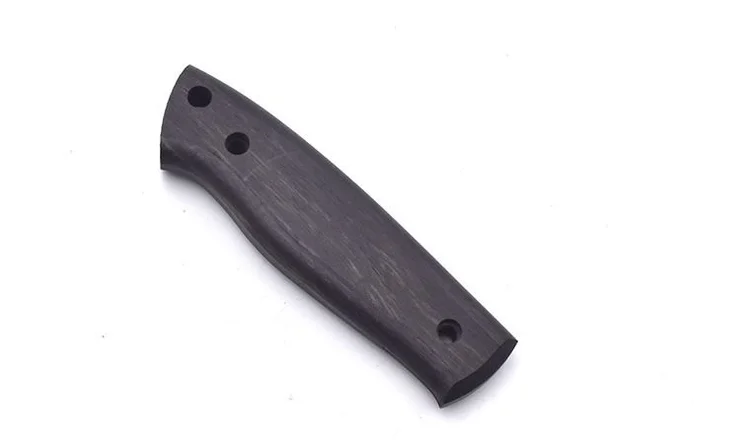
Few woods have been treasured for longer. Ebony was already used in ancient Egypt, and its name travelled with it: probably from Egyptian, through Greek ebenos and Latin ebenus, into our languages today. In French, a master cabinetmaker is still called an ébéniste, from ébène. Over the centuries, ebony became the black keys of pianos, the fingerboards of violins and cellos, chess pieces, knife handles and the dark, polished butts of pool cues.
Qualities
Ebony is in a different weight class: around 955 kg/m³ and roughly 13,700 N, more than twice as hard as the other woods here. Its pores are extremely fine, so it polishes to a deep lustre. It is also oily, which can make gluing tricky, and it dulls tools quickly.
How it stands out
Nothing else gives that solid black, glass-smooth look, or that reassuring weight in the hand. In a cue butt, that weight helps with balance. Ebony also asks for care when buying: Gaboon ebony is listed as vulnerable by the IUCN, and Madagascar’s ebonies have been under international trade controls (CITES Appendix II) since 2013. Good makers buy it from documented, legal sources.
Curly birch: the Nordic figure
Where it grows
Curly birch (Betula pendula var. carelica), also called Karelian birch or masur birch, and visakoivu in Finnish, is a rare natural variety of silver birch. It grows in scattered stands across southern Finland, Karelia, the Baltic countries and parts of Scandinavia, and it is most abundant in Finland and Karelia. (More in Where curly birch grows.)
A little history
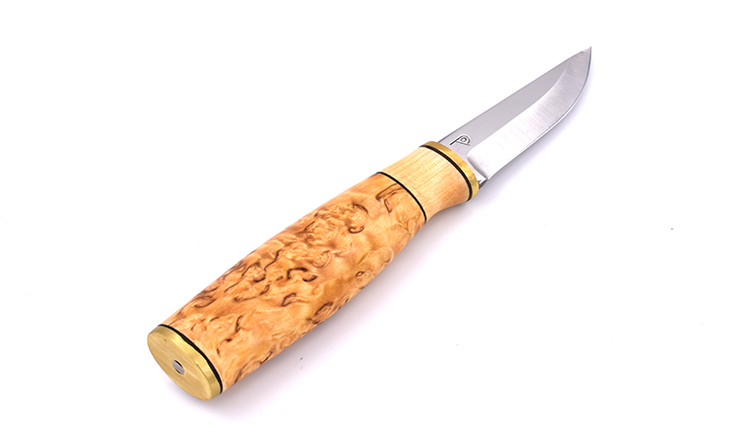
Its figure has been prized for centuries. In late 18th-century Russia, Karelian birch was a favourite for the marquetry furniture made for new palaces. In 1917, Fabergé even designed an imperial Easter egg in Karelian birch for the Dowager Empress; the revolution meant it was never delivered. In Finland, it has long been a favourite for puukko knife handles. (For the myths and traditions around the birch tree, see the origins and mythology of curly birch.)
Qualities
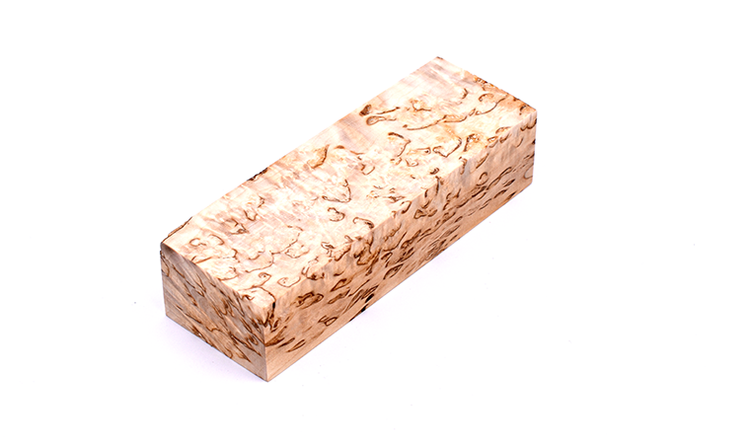
Naturally dried curly birch weighs around 650–730 kg/m³, and masur birch measures about 5,400 N on the Janka scale, close to walnut. Once stabilised with resin, its density rises to 1,200–1,300 kg/m³. The wood is pale honey in colour, with brown flecks, waves and flame-like marks running through it, formed as the tree grows. It is fine-textured, finishes smoothly, and takes stabilisation and colour beautifully.
How it stands out
Its figure. Walnut and maple can be figured too, but in curly birch the figure is the whole point, and it never repeats. The trees grow short and twisted and the figure is unpredictable, so curly birch is traditionally sold by the kilo rather than by the cubic metre. Very few woods are traded that way.
Why we love curly birch
We have worked with many woods over the years, and we respect every one of them. But curly birch is the one we keep coming home to. Since 1995 we have dried it, cut it, stabilised it and fitted it to our own Brisa knives here in Jakobstad, and it still surprises us. Every block we open shows a pattern no one has seen before. It is dense enough for hard use, comfortable in the hand, and it grows in the forests around us.
When a maker chooses curly birch, their customers get more than a handle or a cue. They get a small piece of Finland in their hands, and one that is truly one of a kind.
Making knives, cues or other premium products? Ask us for samples in Standard, Super or Extreme grade.
Contact us